
Most Profitable Businesses


In our third year we ran a product line posting a margin I would have bragged about at any dinner party, and it nearly killed the company — not because it wasn't profitable, but because we couldn't fund it through its own cash-conversion cycle. That is the distinction most lists of the most profitable businesses quietly skip. They rank the most profitable small businesses on margin alone and never ask the harder question: does this business still exist in year five? Profitable is not the same as fundable, and margin is not the same as survivable. This 2026 guide ranks 15 startable businesses on both — each with a sourced profit margin, a real startup-cost range, and its actual survival odds — plus which ones fit your budget. It lives in small business for a reason: these are businesses you can start, not Fortune 500 industries you can only read about. At the end, I'll hand you a check to run before you commit to any of them.
Do the highest-margin businesses actually survive?
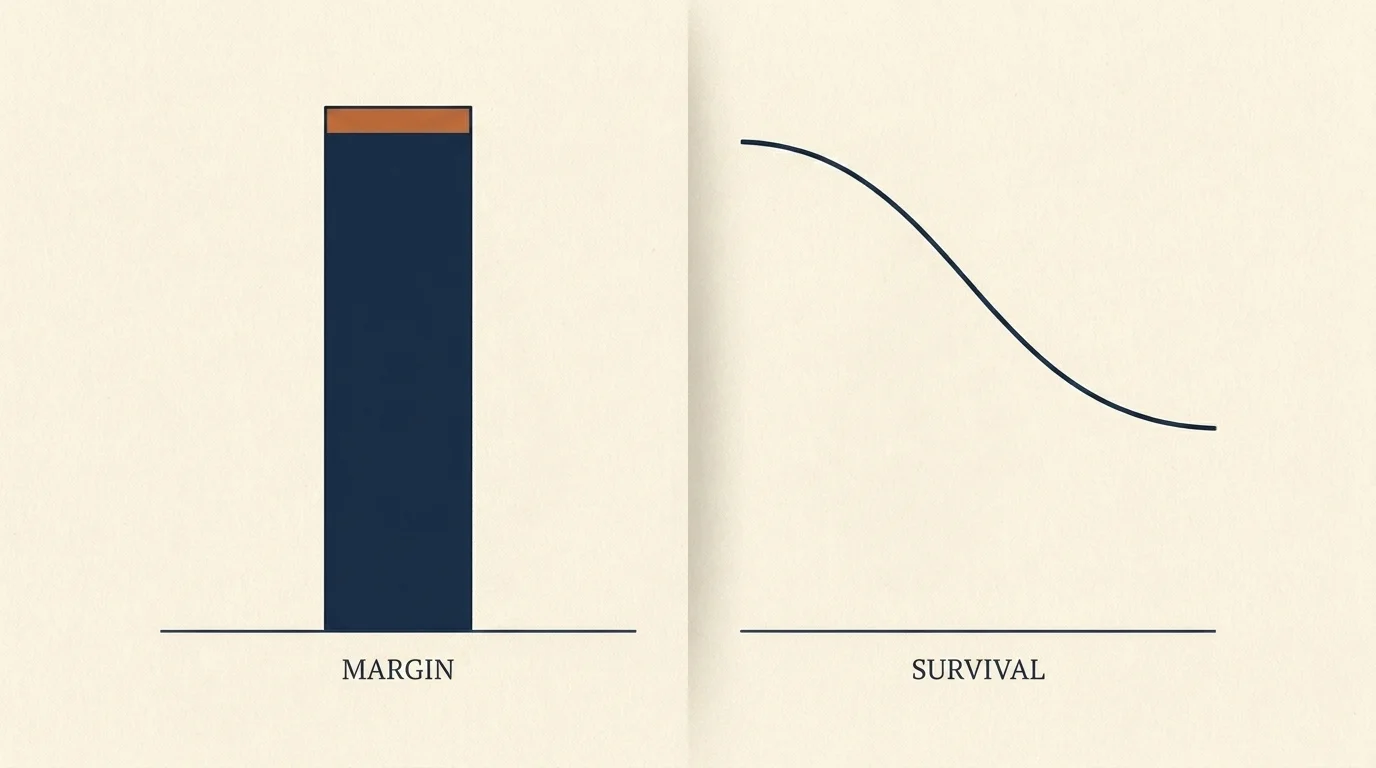
High margin and long survival are different questions. The most profitable business is not the one with the fattest margin — it's the one whose margin still exists in year five.
Start with two numbers most lists skip. Only 62% of US companies generate net income at all, and the economy-wide average net margin is just 10.9% (Kentley Insights / IRS Statistics of Income, June 2026). Profitability is not the default; it's the exception dressed up as the norm.
Then the survival math. About 78.5% of new US businesses make it through year one, but 48.6% have closed by year five and 65.3% by year ten, with first-year failure ranging from 6.9% in agriculture to 30.8% in mining and oil and gas (BLS Business Employment Dynamics; LendingTree). A fat margin buys you nothing if you're in the 48.6%.
So the whole list that follows is scored on three columns, not one: profit margin, startup cost, and a survival note. That's the lens. A gorgeous margin on a business you can't fund through its cash-conversion cycle is a trap I have personally sat in — the P&L said we were profitable while the cash account said we were dying.
The 15 most profitable businesses at a glance (margins, startup cost, survival)
Read this table as a decision tool, not a leaderboard. The survival math is first-party BLS data, by way of LendingTree; the per-model margins come from 2026 industry roundups — including franchise and vendor sources like Salons by JC and Hostinger — which I've sanity-checked against the IRS margin ceilings rather than taken on faith. The startup-cost ranges are typical, not promises. Scan for the row where the margin, the capital you can raise, and the survival note all line up with your situation; that intersection, not the top row, is your answer.
| Business | Avg profit margin | Startup cost | Difficulty / survival note | Best for |
|---|---|---|---|---|
| Consulting / advisory | 70–85% | $0–5K | Low overhead survives downturns | Experts monetizing know-how |
| Bookkeeping / accounting | 50–70% | $2–10K | Sticky, recurring clients | Detail-focused finance types |
| Insurance agency | 50.2% | Low + licensing | Renewal income; license gate | Relationship sellers |
| AI / automation consulting | 60–80% | $0–5K | New category, unproven longevity | Technical operators |
| Digital marketing agency | 50–70% gross / 20–40% net | $1–10K | Scalable; retainer churn | Marketers |
| Pest control | 46.9% | Equipment + licensing | Recurring contracts | Route operators |
| Pet care | 40–60% | $1–15K | Wellness tailwind | Animal people |
| Landscaping / lawn | 40–60% | $10–50K | Repeat revenue; seasonal | Outdoor operators |
| Cleaning services | 30–50% | $2–10K | Low barrier; +52% demand by 2030 | First-time owners |
| Event planning | 30–50% | $2–10K | Watch cash timing | Organizers |
| Virtual assistance | High (service, ~0 COGS) | ~$0–1K | True low-cost entry | Remote starters |
| Real estate agent | ~38.5% sector | Low + licensing | Commission; lumpy income | Networkers |
| Software / SaaS | ~77% gross | Skill/time-heavy | Highest ceiling, highest risk | Builders |
| Dropshipping / e-commerce | 10–30% | $0.5–5K | Thin margin after ad spend | Testers |
| Food trucks | 5–15% | $50–200K | High revenue ≠ high margin | Culinary operators |
The startup-cost and "best for" columns are what turn this from a ranking into a decision tool: the highest-margin row is worthless if you can't fund it, and the thin-margin rows at the bottom are here to prove that revenue and profit are not the same word.
The 15 most profitable businesses to start in 2026, ranked
Here are the 15 most successful small business ideas for 2026, ranked by margin from highest to lowest, with the thin-margin models placed last on purpose. Every figure below is sourced, and every entry follows the same four beats: what it is, why it's profitable, its margin and startup cost, and how you'd actually start it.
1. Consulting and management advisory
You sell expertise — strategy, operations, a specialized skill — with no product to manufacture. Because there's no inventory and no cost of goods sold, 70–85% of revenue can reach the bottom line (Salons by JC, 2025), the highest margin on this list. Margin 70–85% on $0–5K to start. How to start: pick one narrow problem you've personally solved before, price by the outcome rather than the hour, and land two anchor clients before you quit anything.
2. Bookkeeping and accounting services
Recurring monthly revenue and clients who rarely leave — the stickiness is the moat. Every business needs its books done every month, which turns one sale into years of contribution margin. Margins run 50–70% on $2–10K of startup cost (Salons by JC, 2025). How to start: get certified in one platform, QuickBooks or Xero, niche into an industry whose numbers you already understand, and price per month, not per hour.
3. Insurance agency
An independent agency earns commission on the first sale and again on every renewal, which is why owner margins reach 50.2% (TrueProfit, 2026). The renewal book is an annuity that compounds while you sleep. Startup cost is modest but gated by state licensing. How to start: pass your state exam, appoint with two or three carriers, and build a niche book — small-business or specialty lines beat competing on auto and home.
4. AI-assisted and automation consulting
The freshest high-margin entry: you help companies wire AI into their marketing, support, or operations. It carries consulting-tier margins, roughly 60–80%, on near-zero startup cost, and it's the fastest-growing new-idea category on 2026 lists as technology drives margin expansion (Forbes; Kentley Insights, 2026). How to start: go narrow — one workflow, one tool, one industry — and sell measured time savings, because the category is young and buyers want proof, not promises.
5. Digital marketing agency
Retainer revenue and no inventory make agencies scalable, but be honest about the two margins: 50–70% gross collapses to 20–40% net once you pay contractors and tools (Salons by JC, 2025). The sector grows about 11% a year. Startup cost is $1–10K. How to start: lead with one service — paid ads, SEO, or email — in one industry, on a retainer model. Project work starves your cash-conversion cycle.
6. Pest control
Contracts, not one-off jobs: quarterly service turns customers into recurring revenue, which is why pest control sits near the top of home services at 46.9% owner margin (TrueProfit, 2026). It demands equipment and state licensing, so the entry is higher than a laptop business. How to start: get licensed, buy a used route if one is for sale, and lock clients into annual agreements from day one.
7. Pet care — grooming, sitting, and walking
The wellness economy — $6.3 trillion now, headed to $9 trillion by 2028 — spills straight into pets, and owners treat their animals as family through downturns (Salons by JC, 2025). Margins run 40–60% on $1–15K, depending on whether you groom (equipment) or walk (nearly nothing). How to start: begin with the lowest-overhead service, build a repeat roster in one neighborhood, then add higher-ticket grooming once demand is proven.
8. Landscaping and lawn care
Recurring maintenance contracts produce dependable repeat revenue at 40–60% margins, but the $10–50K equipment bill makes it more capital-intensive than most service businesses (Salons by JC, 2025). Seasonality is the cash trap in northern markets. How to start: sell maintenance before design-build, buy equipment used, and price recurring mowing to cover your fixed costs so one-off projects become pure contribution margin.
9. Cleaning services (residential and commercial)
The lowest barrier on this list with real staying power: home-cleaning demand is projected to rise 52% by 2030 (Salons by JC, 2025). Margins run 30–50% on $2–10K of startup cost. Commercial contracts pay less per hour but far more reliably than residential. How to start: begin residential to learn operations and cash flow, then chase commercial contracts for the recurring revenue that smooths payroll.
10. Event planning
Project-based and creative, with 30–50% margins on $2–10K, growing about 7% a year (Salons by JC, 2025). The profit is real; the danger is cash timing. You front deposits to venues and vendors long before the client's final payment clears. How to start: specialize in one event type — weddings, corporate, or nonprofit galas — and structure deposits so client money always lands before you pay a vendor.
11. Virtual assistance
The true near-zero-cost entry point: administrative, inbox, and scheduling support delivered from home. There's no cost of goods sold, so almost the entire service rate is contribution margin, and startup cost is effectively a laptop you already own. How to start: package a specific skill — calendar and travel, or podcast production, or CRM cleanup — for a defined monthly retainer rather than selling undifferentiated hours.
12. Real estate brokerage or agent
A commission model with a licensing gate: agents keep a large share of each transaction, and the sector's roughly 38.5% net margin (Kentley Insights, 2026) reflects how little overhead sits behind a closed deal. Income is lumpy and back-loaded. How to start: pass your license exam, join an established brokerage for lead flow and mentorship, and reserve six months of runway, because commissions arrive on the market's schedule, not yours.
13. Software and SaaS
The highest ceiling here — gross margins near 77% (Hostinger, 2026) because you build once and sell infinitely — but flag it plainly: this is a different game. It costs skill and time before it costs money, and most products never find a paying audience. How to start: solve a narrow, painful problem for a niche you already know, charge from the first customer, and treat pre-revenue months as the real cost of entry.
14. Dropshipping and e-commerce
The reality-check entry: cheap to start at $0.5–5K but thin, with 10–30% margins after ad spend and platform fees (Salons by JC, 2025). Revenue can look impressive while contribution margin barely covers customer-acquisition cost. How to start: only if you can source a differentiated product and keep CAC well below gross margin — otherwise you're buying revenue at a loss and calling it a business.
15. Food trucks
Included precisely to break the "high revenue equals high profit" reflex. A truck can gross well and still net just 5–15% on a $50–200K build-out (Salons by JC, 2025), because food cost, labor, and permits eat the top line. This is the closest model to the one I actually ran, and the lesson transfers: a busy truck with a thin margin and a long cash cycle is more fragile than a quiet consultancy. How to start: lease a commissary and prove a tight menu before you buy a truck.
The most profitable businesses by startup budget
What can you actually start with $10,000? More than you'd think — the highest-margin businesses on this list are also among the cheapest to launch.
From home, under $1,000: virtual assistance, consulting, and bookkeeping run on skills and a laptop with near-zero overhead — the fastest path from decision to first dollar.
$0–10,000: cleaning, digital marketing, event planning, and dropshipping. Enough to buy basic equipment or ad inventory, not enough to absorb a long cash-conversion cycle, so favor models that get paid close to when they deliver.
$10,000–50,000: landscaping, pet care with grooming equipment, and food-service-lite. Higher fixed costs demand higher recurring revenue to justify them.
Here's the operator's caveat, and it matters more than the tier you pick: fund the business you can carry through its cash-conversion cycle, not just the one you can afford to start. The gap between those two numbers is where under-capitalized businesses quietly die, and it's why how you deploy that startup capital matters as much as how much you have.
Why low-overhead service businesses win on margin
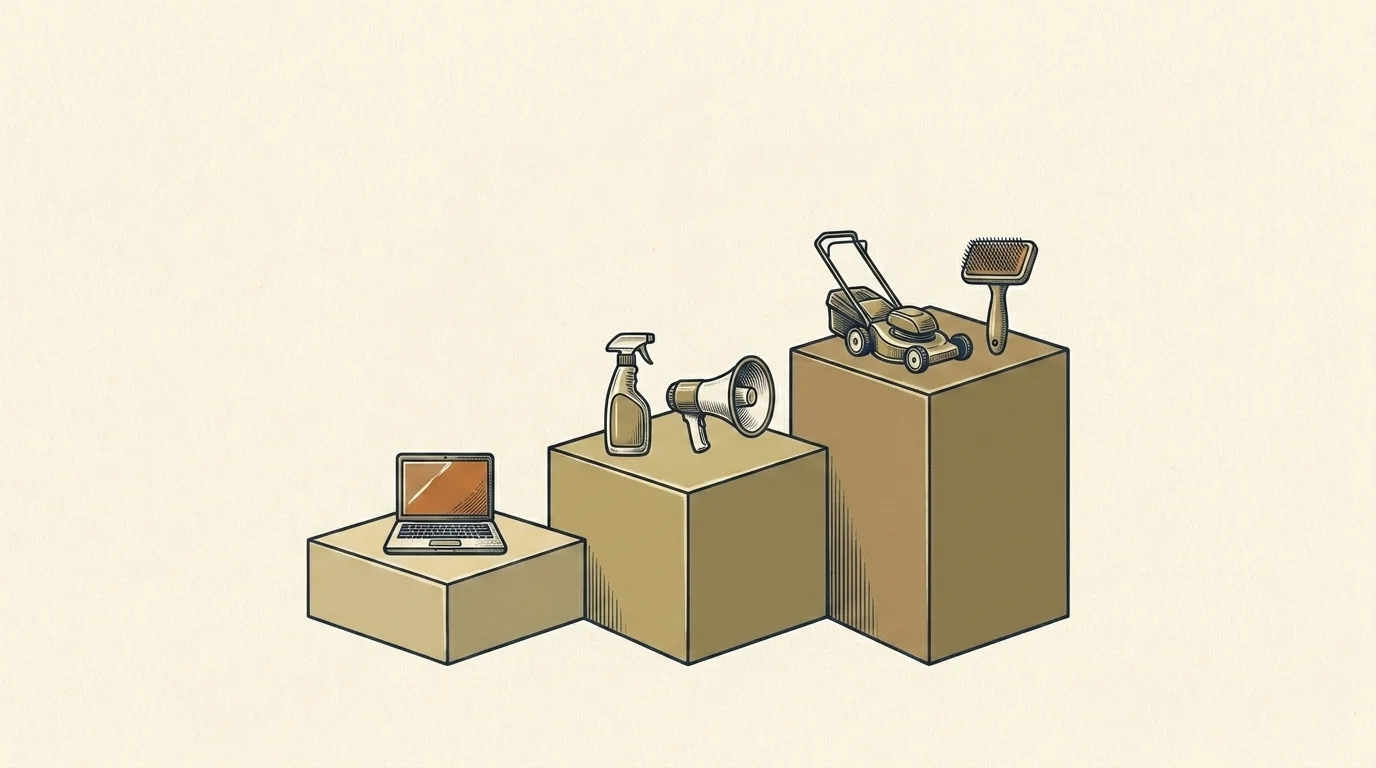
There's a reason the top of every credible list looks the same. As GoDaddy puts it, "Service-based businesses are often the most profitable because they have low overhead and don't require inventory." That's not a slogan; it's an accounting fact.
Here's the mechanism in plain operator terms. A service business has little or no cost of goods sold, so gross margin flows almost intact into contribution margin — the money left to cover fixed costs and profit. No inventory means a shorter cash-conversion cycle and far less working capital trapped on your balance sheet waiting to convert back into cash. You get paid for time and expertise, and you get paid sooner.
Now contrast that with an inventory or equipment model — a food truck, a dropshipping store. Revenue can be large and still leave you fragile, because every dollar of sales first passed through a dollar of product you had to buy, store, and finance. Big top line, thin margin, long cash cycle. That's the trap the margin column alone never shows you.
Buy vs. build: the most profitable businesses to buy
Starting from zero isn't the only path to a profitable business, and sometimes it's the worse one. Buying an established business hands you proven revenue, existing cash flow, and — the part first-time founders undervalue — a survival track record already on the board. You skip the years when 48.6% of new businesses fold.
The trade is that you pay for that de-risking up front, usually a multiple of earnings, and you inherit the seller's problems along with their profit. Bought well, an income-producing business is exactly the kind of asset that compounds into long-term wealth — but "bought well" is doing all the work in that sentence.
Before you get anywhere near negotiating the multiple, run one check I never skip: pull the target's accounts-receivable aging and its margin trend over the last three years. A "profitable" business with receivables stretching past 60 days and a margin quietly eroding isn't a bargain — it's someone else's cash crunch, and you're about to buy it.
The macro reality check: the most profitable US industries
Which are the most profitable businesses in the world by industry? At the top of the US table sits Trust, Fiduciary, and Custody Activities at 89.4% net margin — the ceiling no small business will touch (Kentley Insights / IRS SOI, June 2026).
Below that: Packaged Software and Games at 53.1%, Semiconductors around 40%, Real Estate at 38.5%, and Commercial Banking at 31.1%. Those are the most profitable businesses in America by sector — and here's the reconciliation no competitor makes. The startable service businesses above, at 50–85% margins, actually rival or beat most of these industry ceilings. You do not need a Fortune 500 to reach elite margins. But keep both anchors in view: 89.4% is the true ceiling, and 10.9% is the average reality most businesses actually live in.

The check to run before you commit
If you take one idea from this list, take this: rank the most profitable businesses by margin times survivability, not margin alone. A fat margin on a business that can't survive its own cash-conversion cycle isn't the most profitable option — it's the most seductive one, and I've watched it end more companies than any thin-margin idea ever did.
So here's the check to run before you commit to anything above. Put the model's expected margin next to its real startup cost and the 48.6% five-year closure rate. If it only works assuming you land in the surviving half — no cushion for a slow year, a late-paying client, or a longer-than-planned cash cycle — you haven't priced in reality. Rework it until it survives a bad year, then start.
One caveat: this is education, not individual financial or business advice — consult a licensed advisor before you commit capital. Then pick your budget tier, run the check, and start with the highest-margin model you can actually fund through its cash cycle.
Frequently Asked Questions
Low-overhead service businesses lead — consulting (70–85% margins), plus bookkeeping and cleaning (30–70%) — because they carry no inventory cost and reach profit fast.
Among startable businesses, consulting and bookkeeping (50–85%). Across all US industries, trust, fiduciary and custody activities top the table at 89.4% net margin (IRS SOI, 2026).
Established digital-marketing agencies, bookkeeping practices, and cleaning services routinely clear $10,000 a month at 30–70% margins once their client rosters are built.
Consulting, bookkeeping, virtual assistance, and cleaning start for $0–10k and reach 30–85% margins, making them the strongest low-investment options.
About 78.5% survive year one, but only roughly 51% reach year five (BLS) — margin matters, but survivability matters just as much.